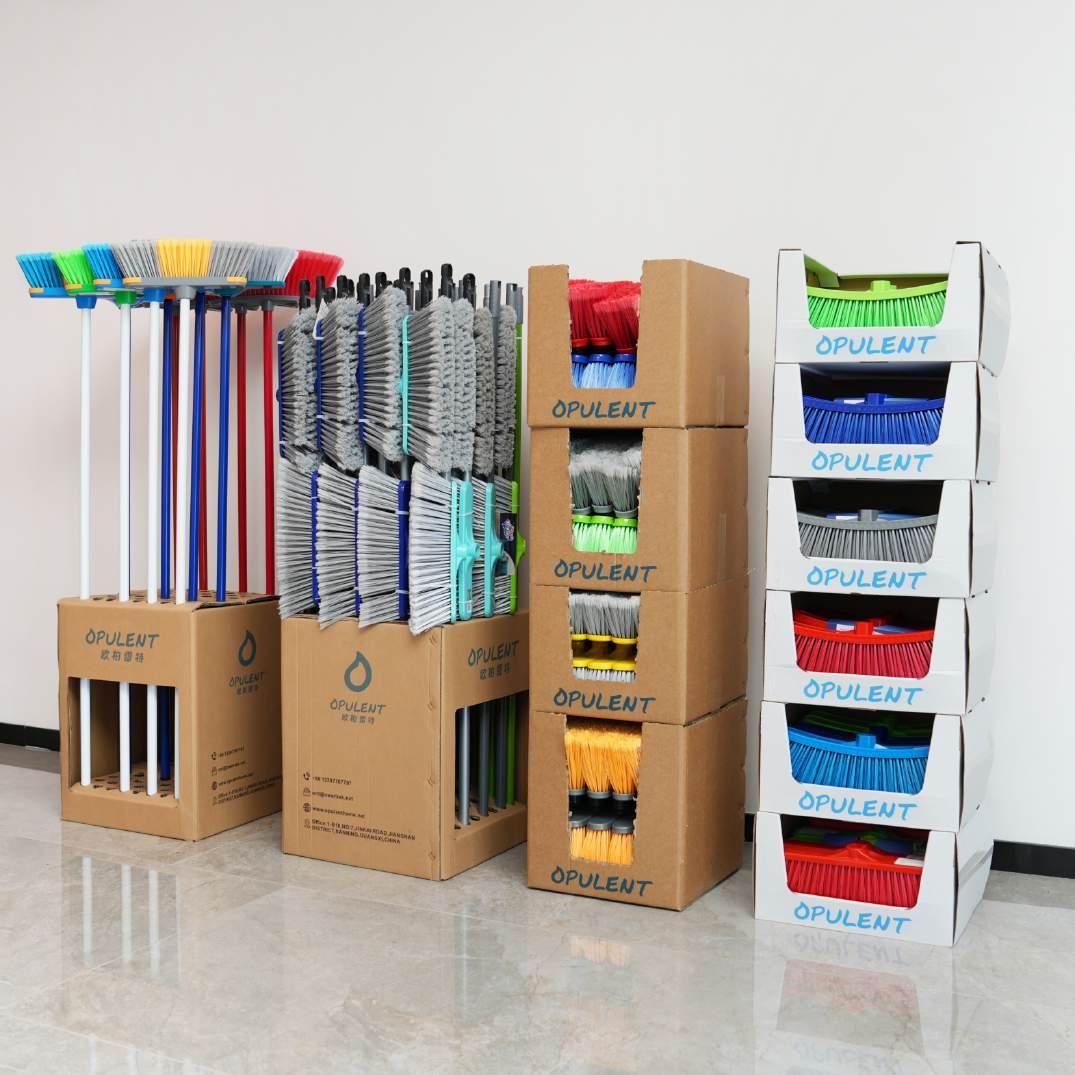
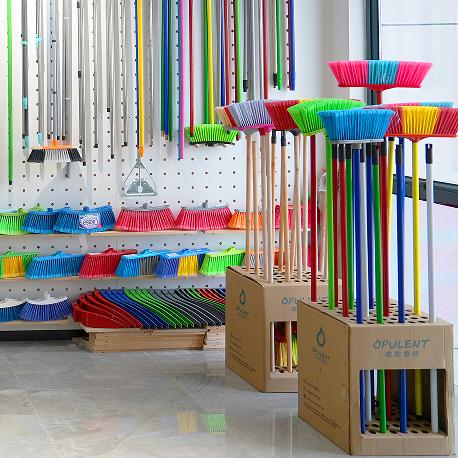
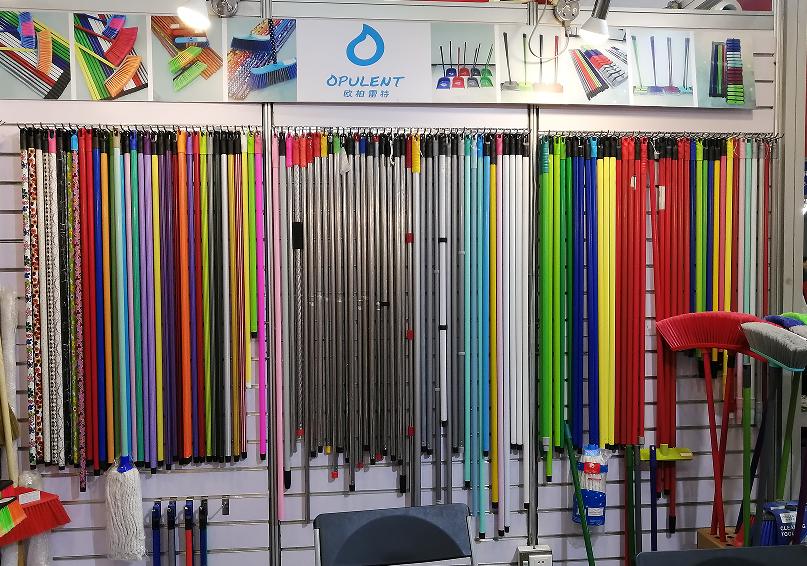
“One broom loses bristles and deforms after half a year of use” is a common frustration for many households. However, in our factory’s laboratory, plastic bristle brooms can withstand 100,000 consecutive sweeping tests, with a bristle wear rate of less than 2%. Behind this performance lies not just “thick material,” but three key wear-resistance codes ranging from raw material selection to process design.
Code 1: Material Formula is the “Genetic Foundation” of Wear Resistance
The wear resistance of plastic bristles is determined from the source. We have abandoned ordinary PP material (which is prone to deformation) and adopted a composite formula of PA66 nylon and PBT. PA66 nylon has a dense molecular structure and high crystallinity, inherently boasting excellent wear-resistant properties—it forms a smooth surface during friction to reduce wear. Meanwhile, PBT supplements elasticity, preventing bristles from breaking due to repeated bending.
To further enhance wear resistance, we also add 2% glass fiber to the raw materials. These micron-level fibers embed in the plastic matrix like steel bars, not only increasing bristle hardness by 30% but also dispersing the impact force during sweeping to avoid excessive local wear. Tests show that the wear life of this composite material is 2.5 times that of ordinary PP plastic bristles.
Code 2: Production Process Adds a “Layer of Protection” for Wear Resistance
Even the best raw materials require proper processing to unlock their potential. In the bristle forming stage, we specifically added a “low-temperature setting” process: after melt spinning, the plastic bristles are treated in a constant temperature environment of 50°C for 4 hours. This makes the molecular arrangement more regular and stable, thereby improving deformation resistance. Though seemingly simple, this step increases the bristle recovery rate from 85% to 98% after repeated sweeping.
The bristle planting process is equally crucial. We use a “double-row dense planting + hot-melt reinforcement” technology to firmly fix each bristle in the plastic base, achieving a bristle density of 120 bristles per square centimeter. Compared with the traditional glue bonding process, this method avoids bristle loss caused by uneven force during sweeping, increasing the overall wear resistance of the broom head by 40%.
Code 3: Structural Design Resolves “Stress Concentration” That Causes Wear
Many people overlook that improper structural design can accelerate broom wear. After thousands of tests, we optimized the “barb-style bristle arrangement”: the outer bristles are slightly longer and harder, responsible for withstanding friction on rough surfaces; the inner bristles are shorter and more elastic, used for sweeping dust in gaps. This layered design prevents excessive pressure on a single bristle.
The connection between the broom head and the handle is a key protection area. Our new products replace the all-plastic structure with a “metal-reinforced buckle,” adding an annular metal bushing at the connection. This disperses the force during sweeping to the entire base, preventing the buckle from breaking due to repeated stress—which is also one of the key details that allow our brooms to pass the UK’s BS EN 17284 wear resistance standard certification.
From Laboratory to Daily Life: Wear Resistance Stands the Test of Reality
These technologies are not just confined to test reports. In user feedback from the UK’s B&Q supermarkets, plastic bristle brooms using the same technology have an average service life of 18 months, 60% longer than ordinary products. In high-frequency use scenarios such as logistics warehouses—even with daily sweeping of over 1,000 square meters—the broom heads remain free of obvious deformation for 3 months.
“Wear resistance doesn’t rely on ‘toughing it out,’ but on scientific design to properly disperse force,” explained our technical director. From micron-level adjustments to the material formula to the control of every parameter in the production process, it is the combination of these details that allows plastic bristle brooms to break free from the label of “consumables” and become truly durable cleaning tools.